Sunday, November 12, 2006

Can Lady Liberty's message be the same in an age of Islamic extremists ?

"Give me your tired, your poor, your huddled masses yearning to breathe free, the wretched refuse of your teeming shore. Send these, the homeless, tempest-tossed to me. I lift my lamp beside the golden door." Will the door remain open, or will American immigration policy change?


KJW: The times they are a changin'

In August 2006, Peter Costello, the Australian Treasurer, stated: "What I've said is that this is a country, which is founded on a democracy. According to our Constitution, we have a secular state. Our laws are made by the Australian Parliament. If those are not your values, if you want a country which has Sharia law or a theocratic state, then Australia is not for you . . . there are some clerics who have been quoted as saying they recognize two laws. They recognize Australian law and Sharia law. There's only one law in Australia, it's the Australian law. For those coming to Australia, I think we ought to be very clear about that. That's what we ask of people that come to Australia and if they don't, then it's very clear that this is not the country - if they can't live with them - whose values they can't share. Well, there might be another country where their values can be shared."

In my prior entry I noted that British opinion polls indicate that in certain areas nearly have of the Muslim immigrants identified themselves as Muslim first and British second. This is perceived by some as part of the problem in Britain since these immigrants are not being assimilated.

Are Americans truly different in this regard? If you asked most Americans to rank in order of importance to them God and America, don't you think that most respondents would rank them in that order - 1. God, and, 2. America. Even though I believe that to be true there is a distinction that is important. I don't believe that most Americans would say that they are a Catholic, Baptist, Mormon, or (insert your own religion) first and an American second. I believe Americans see religion as part of their life and not who they are. Now don't get me wrong, each of these groups would like to effect changes to our society, but I don't think that they are looking to fundamentally redesign our government.

We would be kidding ourselves if we did not acknowledge that fundamental change is a goal of Islamic extremists. While the overwhelming majority of Muslims are peace loving persons who do not embrace violence as a means of spreading Islam, there does remain a growing segment of Islamic extremists who believe that the ends justify the means. The ends that they seek is for the world to be one big Islamic state.

So is Australian Treasurer, Peter Costello, just saying what many are thinking? In this world of political correctness is an "America - love it or leave it" position acceptable? I grew up in the south in the 60's and 70's. I frequently saw "love it or leave it" bumper stickers on the back of pickup trucks driven by stereotypical rednecks. I am sure it arose in response to the Vietnam anti-war movement. To me it always meant never question the actions of the government. I always dismissed the people as being uneducated sheep who couldn't think for themselves.

The First Amendment to the Constitution guarantees us the right to "petition the Government for a redress of grievances". I believe that it is our duty to stand up and say when we think our government is not doing things right. That was true during the Vietnam war and that is true now (if you doubt this to be the case check the results from last week's election).

Nevertheless, can our policies toward immigration and those already here legally afford not to change in light of the current state of the world? I think not. I believe that allowing immigration to America is a fundamental part of who we are as a country. However, to paraphrase Australian Treasurer, Peter Costello, I believe that America is a country which is founded on a democracy. According to our Constitution, we have a secular state. Our laws are made by the people through Congress, not by religious leaders. If those are not your values, if you want a country which has Sharia law or a theocratic state, then America is not for you.

As Bob Dylan once wrote: "There's a battle outside, and it is ragin'. It'll soon shake your windows, and rattle your walls. For the times they are a-changin'."

We need to be ready for the change.

EJS:

It doesn't matter if you close the front door if the back door is torn off the hinges. This debate is meaningless unless the United States of America enforces it's sovereignty on the southern and northern borders. The bad news is, the only thing standing between us and full-fledged amnesty WAS the Republicans in the US House. Now with the Democrats taking over, we will have George Bush's amnesty program by March of next year, AND STILL NO WALL. Although the Secure Fence Act was passed, it only provides 700 miles of fence for 2000 miles of border. There is a little-known clause in the bill which says funds could also be used to create a "virtual wall" with sensors, cameras, drones, etc, INSTEAD of building an actual wall. So I will believe it when I see it. Since Reagan's amnesty program in 1986, the illegal immigrant population has increased from 4 million to 12-20 million. We are looking at another 50 million illegal immigrants without proper border enforcement. If a bathtub is overflowing, you have to turn off the spigot before you deal with the water already in the tub. Enforcement FIRST is the only intelligent solution to this problem. We shouldn't spend two cents on homeland security if we don't secure the border; it's a waste of money. Anyone can bring ANYTHING they want over either border right now. The possibilities are horrific to think about, but we cannot act like the threat isn't there. When we wake up one morning and we have lost the better part of one large American city, maybe then the politicians will get it, because the people will be ready to lynch them.

Friday, November 10, 2006

Is Europe lost already?


With a history of lax immigration policies and emphasis on tolerance, has Europe already been lost to radical Islam? Is the United States headed in the same direction?


KJW: Europe is not lost, yet.

The French riots last November, and the controversy and violence related to the Danish cartoons of the Prophet Mohammed, make clear that the ongoing struggle with radical Islamism is, if anything, more of a problem presently for Europe than it is for America.

The United States only has a Muslim population of less than 1 percent. For Europe, however, it is much different. In the Netherlands, 6 percent to 7 percent of the population, and as much as half the population of large cities like Amsterdam and Rotterdam, are Muslim. In France, the percentage is around 10 percent.

Many of the organizers of recent terrorist incidents—including Mohammed Atta, the Sept. 11 ringleader; the March 7 Madrid bombers; Mohammed Bouyeri, assassin of the Dutch filmmaker Theo van Gogh; and the July 7 London bombers—were radicalized not in the Middle East, but in Western Europe. Many were second-generation citizens who spoke their adopted country's language fluently.

There is no question that what has come to be called "Eurabia" constitutes a major problem for European democracies. One major factor is that European Muslim communities are mostly located in isolated ghettos, which have become fertile breeding grounds for the growth of a highly intolerant version of Islam. A number of British opinion polls over the past year have found that a substantial minority would like to see Islamic law instituted in heavily-Muslim areas of Britain and that nearly half identified themselves as Muslim first and British second.

European governments have only recently begun to respond to this problem. The Dutch speak of the van Gogh murder in November 2004 as their Sept. 11, and the political transformation since then has been astonishing. The government has cut off virtually all new immigration into the country and given the police Patriot Act-type powers to pursue potential terrorists.

Following the London bombings, the British government has initiated a significant campaign to crackdown on the Islamic extremists.

The question looms - is it too little, too late? Europeans should have started a discussion about how to integrate their Muslim minorities a generation ago, before the winds of radical Islamism had started to blow. The United States needs to pay attention to Europe's situation and not wait until the point of critical mass has been achieved at home. This generation of Americans need to address this situation within our borders so that someday we will not be referred to as "Amerabia".

It appears now that the European governments believe their only solution to this problem is to crackdown on the Islamist extremists. This may indeed be their only short term answer; however, history tells us that when crackdown is the only option, problems aren't solved and usually ends up getting worse. You know, maybe Europe is lost.

EJS:

Perhaps all is not lost, yet. Europe is on a collision course with Islam, and it is largely due to their own policies and political correctness. Immigration laws and the policy of inclusion above all else has allowed the enemy to crawl in the back door and sit at the dinner table. Now they are pounding on the table and want the same prosperity that Europeans enjoy. This policy of inclusion has been limited though. While European states have policies of acceptance, the people themselves still harbor their own prejudices. This has led to a kind of de facto segregation within Europe, where a ceiling in society does exist for immigrants. This has led to widespread frustration within the immigrant community, particularly among the younger second generation, which were born and raised in Europe. Their feeling of resentment combined with the rise of radical Islam has caused a perfect storm. This has proved to be a fertile ground for Al Qaeda and other radical groups to recruit from, with the internet playing a leading role in recruitment. By just planting the seed of radicalism, an actual Al Qaeda representative isn't required to show up and sign them up.

The Europeans strive to have religious tolerance at all costs as well. Islamists have been allowed to infiltrate the countries, then set up mosques and madrassas which teach a particularly ruthless strain of Islam called Wahhabism. This strain originates in Saudi Arabia, and the House of Saud sinks millions into propagating their beliefs across the world. The Europeans' problem arises because they are so incredibly politically correct, they fail to see when religion crosses the line and becomes a threat to national security and their basic way of life. Britain has finally started to crackdown on radical mosques, and recently a protester from the Mohammed cartoon incident was convicted of inciting violence when he led a protest calling for the beheading of anyone who dare to insult Islam.

France is probably the country most at risk. Approximately 10% of France's population consists of Muslim immigrants. The riots in the Paris suburbs in 2005 first brought the problem to light, and while the large-scale rioting has subsided, a low-grade "intifada" has persisted ever since. Over 2,500 French police have been injured fighting Muslim youths in the streets of Paris this year. Recently, attacks have grown more brazen, with packs of youths donning all black clothing and masks, ambushing police and city buses in coordinated attacks. The problem in France may be too far out of control already.

Here in the United States, we haven't gotten to the point where Europe currently is. Muslims don't have the numbers here yet. Also, government crackdown after 9/11 has not created a good climate for radicalism to thrive in. America's culture is much more focused on assimilation of immigrants, whereas in Europe, immigrants are encouraged to still practice their own cultures and ways of life. It is a MUST for our law enforcement agencies to closely monitor mosques and imams in this country who may be preaching hate and violence. There is a fine line between freedom of speech and endangering others, and we cannot allow that to happen in our backyard.

Thursday, November 09, 2006

Which Presidential hopefuls are in the best position for 2008? Which ones are not ?


With the midterm elections behind us now, which candidates are best positioned for a Presidential run in 2008, and whose Presidential aspirations may have vanished?

MRB:

The horns and party hats of the Democrats' celebration are barely put away and the cap has been screwed on the bottle of Scotch the Republicans used to drown their sorrows and we are already predicting 2008. 2008? That sounds so close and there is so much to do. I am having a hard time thinking that far ahead right now. My feeling is that we need at least the proverbial 100 days to let the Democrats settle in, and by that I don't mean measuring for new drapery.

During this time a couple of things will happen. Not the least important of which will be the emergence of who the new leadership will comprise and how they get this early, crucial job done. It will also reveal who in the Republican party will emerge as the leaders most willing to help right the wrongs they perpetrated for the last 12 years. It's going to be an interesting morality play that unfolds. I hope it won't be a soap opera.

Unlike my colleagues here at 3HM I do not have a long speculative list of contenders at this point nor does it contain any surprises or hidden unknowns. The names are on everyone's mind right now.

As I see it today and today only, the Democrats will nominate a twosome from Hillary Clinton, Barack Obama and John Edwards. Personally I think Mrs. Clinton is the weakest candidate primarily because she is Mrs. Clinton. Apart from her own divisivness, I don't think the country could deal with Mr. Clinton as First Gentleman. The inevitable question of who was running the country would arise. Is Bill getting a backdoor entre to another four years? That's too problematic. Edwards / Obama would be a better combination with North, South, Black, White represented. For the time being that is as deep as my list gets for the Democrats. Oh, yes. One more thing. If John Kerry just sits this one out and takes up thumb twiddling as a hobby we'd appreciate it.

Right now McCain seems to be the Republican front runner because he is moderate, willing to compromise, has the public presence to carry him, and seems to be capable of believably taking the high road in disagreements. The others I see right now as contenders are Mitt Romney, Rudy Guilliani, and perhaps Bill Frist. The combinations with these four in either president or vice-president chairs are endless. It's odd about Guilliani, but for all the time he was mayor of New York, I never thought of him as a Republican, just as a good mayor. That can only help him. They each represent different parts of the country but do have a unified conservative point of view for now.

That's as close as I can get right now. I'm sure we'll address this once again in 100 days. Stay tuned.


KJW:

REPUBLICAN PARTY:

Top Ten Contenders:

1. Senator John McCain (R-Arizona) - Clear front runner. Probably his nomination to lose.
2. Governor Mitt Romney (R-Massachusetts) - At this point looks to be McCain's biggest challenger. Governors have a way better track record being elected President than do Senators.
3. Senate Majority Leader Bill Frist (R-Tennessee) - Another possible contender for the nomination. His ability to carry South could be the key.
4. Former New York City Mayor Rudolph Giuliani (R-New York) - Has benefit of national name recognition; however, ability to carry South is questionable. As someone originally from the South I can tell you that a person from New York faces an uphill battle in Dixie.
5. Governor Mike Huckabee (R-Arkansas) - Another Southern Governor. Lacks the name recognition at this time.
6. Governor George Pataki (R-New York) - Has benefit of having been Governor, but also faces same issues that Giuliani faces in South.
7. Senator Chuck Hagel (R-Nebraska) - Longshot. Another one who lacks name recognition.

8. Senator Sam Brownback (R-Kansas) - Another longshot.
9. Former Speaker Newt Gingrich (R-Georgia) - Incredible name recognition. Could possibly get nomination in right circumstances but is definitely not electable. Polarizes public like Hillary Clinton.
10. Secretary of State Condoleezza "Condi" Rice (R-California) - Definitely not electable. Does not have the charisma necessary to succeed in a campaign.

DEAD ON ARRIVALS:

1. Senator George Allen (R-Virginia) - Chances of election as President are over.
2. Senator Rick Santorum (R-Pennsylvania) - Another D.O.A. hopeful.

DEMOCRATIC PARTY:

Top Ten Contenders:

1. Senator Hillary Rodham Clinton (D-New York) - Clear front runner. Her nomination to lose. In my opinion she is not electable. She polarizes public opinion tremendously. People love her or hate her.
2. Former Senator John Edwards (D-North Carolina) - Tremendously appealing candidate. If Hillary stumbles he is positioned to pounce.
3. Senator Evan Bayh (D-Indiana) - Another appealing candidate. Needs more exposure nationally.
4. Senator Barack Obama (D-Illinois) - The clear rising star in the party. However, I don't believe that he is electable. Definitely will be on nominee's Vice Presidential short list.
5. Governor Bill Richardson (D-New Mexico) - Benefit of being Governor, as well as prior experience on national level.
6. Senator Ben Nelson (D-Nebraska) - Longshot.
7. Former Senate Majority Leader Tom Daschle (D-South Dakota) - Another longshot.
8. Senator Chris Dodd (D-Connecticut) - Another long longshot.
9. Senator Russ Feingold (D-Wisconsin) - If country is in mood to move to extreme left he is the candidate. Not going to happen. Not electable.
10.Former General Wes Clark (D-Arkansas) - Extreme longshot. Probably has no chance.

DEAD ON ARRIVALS:

1. Senator John Kerry (D-Massachusetts) - His chance has come and gone. Has done nothing to help his chances in last two years. His comments about military in the last week of the 2006 election hurts his chances.
2. Former Vice President Al Gore (D-Tennessee) - Ummm, no.

EJS:

Political junkies on both sides of the spectrum shift their collective focus now to potential 2008 candidates. We always hear complaints about presidential campaigning starting too early, but the truth is, it's been going on since the LAST presidential election. We have seen candidates such as Hillary Clinton and John McCain moving gradually to the center over the last couple of years. Another sad but true fact of American politics: you HAVE to have money to do well. And this race will be no exception. The commonly accepted number is $100 million. That is more than likely what a candidate will need to be considered legitimate. Hillary has a clear advantage in this category, as the Clinton campaign machine is tried and true. With her husband being a living political legend, Hillary should have no problem in the finance department. Any potential Democratic candidate needs to have at least $60 million in the bank one year from now if they expect to challenge her for the nomination. So that works out to about one million dollars a week, not an easy task. So, financially, we can eliminate quite a few potential candidates.

On the Democratic side, I believe the best possible candidate they could put up would be John Edwards. With the South being the new heart of the Republican party, it is a must that any Democrat be able to win a few of those states. Edwards follows in the Clinton mold: a southern Democrat who poses himself as a populist and champion of the working class. Not to mention the family and the looks. John Edwards is the total package and he strikes fear in my heart as a conservative. Hopefully the Democrats aren't smart enough to realize this.


John Kerry still has some funds left from his 2004 run. Unfortunately, he still has the reputation from 2004 as well: a tax-and-spend Massachusetts liberal. His comments before the 2006 election did not help any. He should save everyone's time and money and just serve out the rest of his life term in Taxachussetts.

Ditto for Algore. The hypocrisy he has demonstrated with his push on global warming would provide lots of material for the opposition. His comments deriding the United States on foreign soil probably won't help either.

Barack Obama is an interesting case. As I stated before, he's probably not electable now, but will more than likely run in the primary and will be looking to be #2 on someone's ticket. Joe Biden, Chris Dodd, Wesley Clark, etc. are just fillers during the primary and have no legitimate chance.

On the Republican side, it is John McCain's turn. He has paid more than his fair share of dues in the Senate. While being in the Senate usually acts as a hindrance for any candidate due to the long voting record available for attack, McCain's role as a maverick will help him, as it is hard to pigeon-hole him with a label. He has been on both sides of multiple issues. Seen as a bipartisan and moderate, he is probably the strongest candidate the Republicans can put up.

George Allen's collapse in Virginia has opened the door for another conservative alternative to McCain to step forward. That alternative comes to us in the form of Massachusetts governor Mitt Romney. Word on the street is that he will announce the formation of an exploratory committee within the next couple of months. Widely unknown just a year ago, he has been getting more and more pub lately. Hopefully his being a Latter-Day Saint won't hurt him. An early win in neighboring New Hampshire could spell the end for John McCain.

You thought social conservatives crucified John McCain in South Carolina in 2000? Wait until they get their hands on Rudy Giuliani. He may have done great in New York after 9/11, but that won't be enough to carry him to the nomination. Too liberal socially to make it through the process. Ditto for George Pataki.

Newt Gingrich is one of the smartest Republicans out there still, but his personal baggage makes any possible candidacy virtually impossible. Way too much material for the opposition to seize on. Look for him to be in the cabinet of any Republican elected.

Sam Brownback of Kansas is a solid conservative, but probably too unknown, and has the baggage of being in the Senate. Ditto for Bill Frist, who has no personality.

My prediction: John McCain wins the Presidency in 2008 over Hillary Clinton in another extremely close and divisive election.

Wednesday, November 08, 2006

2006 Election Post Mortem


The real question today is not just who won which race, but what the election results mean for each one of us and the issues we care about, such as the war and the economy.


MRB:

I am sitting here still stunned from what happened yesterday. I had thought the Democrats would pick up the 15 needed to take the House once again. I was hoping that we'd end up with a close split in the Senate. I did not expect the over whelming victory we had. I am all smiles and have been calling and emailing friends around the country patting one another on the back. Wow. Twelve years of eating at the kids table and now we get to sit with the adults.

The question is, after the smoke from the celebratory fireworks blows away, what really happened and, maybe more importantly, how did it happen?

What happened is that a clear message was firmly delivered; not a mixed, irritating message the Republicans could sneak around again, but one that can't be ignored. All the biggest wins, and the ones most people paid attention to, were a referendum on our failed national policies. Not just about Iraq and its obvious issues but also a more subtle message that the citizens -- not just Democrats by the way -- that we are upset by hypocrisy, scandal, taking our hard earned status as the world's greatest power and abusing it by holding much of the world in contempt for having intelligence, upset at the out of control spending, upset that economic upswings only help those in the wealthy club, upset at a lack of compassion for our own countrymen.

How it happened is even more clear. Actually the Democrats probably didn't have to do half of the work they did to win. All we really had to do was watch the GOP implode over the last six months. They kept making the case for us. Control of both houses and the executive gave them a false sense of invulnerablity. They made themselves a laughing stock with their shenanigans which was bad enough but when it involved tragic decisions concerning the lives of our young men and women fighting in Iraq who are bearing the brunt of their arrogance, that's contemptible.

This has given the Democrats what they wanted and there is enough hunger that they just may be able to pull the next two years off beautifully. They have a lame duck President running so scared he let his best buddy Rumsfeld fall on the sword today. The top issue has to be Iraq. No one really believes we can just pull out. That's a worse cop out than what we have been living with for three years. But there must be a New Direction, to quote our running theme, and that can be found. I don't feel we had any reason to reveal any possible plans during this election period and play into Karl Rove's hands. But now in the next three months there has to be a serious plan in place. Period. And no Republicanesque excuses that it can't be done. Do it.

But is this a complete 180 degree turn to a liberal philosophy? No. I don't think so. EJS and I were talking today and we agree that if you look at the local races, state legislatures, individual referendums and propositions, people are still overall moderately conservative. They want our government to reflect who they are; attempting to lead lives of positive morality, of fiscal restraint, and of accountability for one's actions. I urge both Democrats and Republicans to look very closely there for the answers. That's not too much to ask is it?

KJW:

Republicans had hoped to make this years election about local issues. However, according to exit polls, national issues were more important in determining their votes by a nearly 2-1 margin. And most of the national issues cited by voters as important reflect the negative mood of the American public this election.

Despite the opportunity that presented itself to them this year, Democrats have historically squandered chances to make inroads into the Republican control of Congress. This year for some reason that didn't happen. So what did the Democrats do right this time?

They didn't let the Republicans frame the issues. As I said above, the Republicans wanted this election to stay local. Conversely, the Democrats wanted this election to be a referendum on President Bush and the Iraq war. The Democrats succeeded in making it into a referendum.

Politics is often about perception. Perception is influenced by the sound bite. Sound bites such as "Stay the Course", "Cut and Run", and "Tax and Spend".

This time the Democrats didn't crumble but instead turned the tables on the Republicans with these sound bites. The Democrats came after the President strong on the Stay the Course theme. It worked so well that the President disavowed "Stay the Course" and even went so far as to say that it was never the administrations' policy.

Democrats also for the most part stopped calling for an immediate withdrawal in Iraq and simply took the position that we needed to take a "New Direction" with regard to Iraq. This strategy unquestionably worked. The interesting part of this strategy is that the Democrats used it effectively without ever defining the "New Direction".

The traditional Republican attack on Democrats has been that he / she is just another "tax and spend" liberal. For whatever reason you didn't hear that too often during this election. One reason may be that the current Republican administration / Congress has spent like their worst Liberal nightmare.

The first casualty of the election appears to have been Donald Rumsfeld. This morning Secretary Rumsfeld resigned. He is being replaced by Robert Gates, the former Director of the CIA. Gates is currently a member of the Iraq Study Group, the bipartisan group that will soon be making recommendations with regard to a new strategy for the handling of the Iraq war.

Rumsfeld's resignation may be a sign that President Bush is truly interested in working with the Democrats. The President's action in replacing his Defense Secretary may be helpful with regard to avoiding gridlock for the next two years, but it is nevertheless too little too late to avoid the change of power that happened in this election. Now to '08 . . .

EJS:

Taps is playing today for the Republican Party. As we sit back and lick our wounds, we must not wallow in the defeat, but learn from the mistakes and get back to representing positions and issues consistent with the conservative base that put Republicans in office in the first place; the same base that failed to save their necks yesterday. This morning we learned that Secretary Rumsfeld has decided to resign. I don't understand why Bush didn't do this six months ago; maybe if he would have made some concessions such as this before the election, it wouldn't have been as bad as it was yesterday. Chalk it up as another in a litany of GOP mistakes.

Now it is time to have an old-fashioned sitdown and house cleaning for the GOP. It is glaringly apparent that the leadership within the party is subpar, or completely nonexistent. The GOP House contingent now has the duty of selecting a minority leader. Denny Hastert and John Boehner cannot be the future face of the Republican party. We need a leader who inspires the party and constituency. One name who I have heard thrown about is Mike Pence, Republican from Indiana. Ken Mehlman, the GOP chairman, is probably also finished. Karl Rove's credibility has taken a hit with this loss. The President needs to stop listening to political advisers such as Rove and Karen Hughes, and listen more to the people and the generals on the ground in Iraq. Overall, the GOP needs to clean house and get back to the people and values that put them there. If they are able to do this, and once the people see how inept the Democrats are during the next two years, the GOP should be able to regain control in 2008.

Tuesday, November 07, 2006

Exercise your right to vote !


"Let us never forget that government is ourselves and not an alien power over us. The ultimate rulers of our democracy are not a President and senators and congressmen and government officials, but the voters of this country." -- Franklin D. Roosevelt.

Monday, November 06, 2006

Time to predict the outcome of the November 2006 election


Each of us will now set forth our respective predictions of the final overall outcome of tomorrow's election. We will also predict the specific winners in critical Senate races which may very tilt the scales one way or the other


MRB:

Senate:


Arizona: Jim Pederson (D) Jon Kyl (R)

This is my wish and hope vote. My gut tells me that Kyl will win but in the long run a change is necessary. Kyl is too much a Bushman. Pederson by 2 points.

Conn.: Ned Lamont (D) Alan Schlesinger(R) Joseph Lieberman (I)

Lieberman hurt himself earlier with his pro-war stance, but I feel he has recovered and if I get my wish that the Senate splits 50-49-1 he'll side with his former Dems in most matters. Lieberman by 5 points.

Maryland : Ben Cardin(D) Michael Steele (R)

I spent most of my adult life, 25 years worth anyway, in Maryland and lived almost all of it in Ben Cardin's district. I liked him and felt he was competent and forceful for his districts needs. He has weaknesses against Steele. He's not as dynamic for one thing. But Maryland has been such a traditional Democrat state I think when voters pull the lever it'll swing Dem. Cardin by 3 points.

Missouri: Claire McCaskill(D) Jim Talent(R)

This one pains me because I was born in Missouri where I cut my Democratic teeth on stories of Harry Truman and have watched it become more and more stubborn and cranky over the last 50 years. They seem intent on Republicanizing themselves and my sinking feeling is that they will. Talent by 3 points.

Montana: Jon Tester(D) Conrad Burns (R)

I have not followed this race but am hoping for Democratic momentum to carry it. Tester by 2 points.

New Jersey : Bob Menendez(D) Tom Kean, Jr.(R)

Menendez has done a very good job and has monority support. Kean probably would have taken this if he wasn't affiliated with the party of scandals right now and he is also a Bushman at heart. Menendez by 5 points.

Ohio: Sherrod Brown(D) Mike DeWine(R)

This should be a no contest victory for Brown. Brown by 4 points.

Pennsylvania: Bob Casey(D) Rick Santorum(R)

Pennsylavania, a state where I have spent much time, should be ashamed for letting a man like Santorum represent it for this long. He's an embarrassment to the entire Senate. Casey by 4 points.

Rhode Island: Sheldon Whitehouse(D) Lincoln Chafee(R)

Another race which I haven't followed closely and have to rely on the good sense of Rhode Island Dems for guidance. Whitehouse, a man named for the job, by 3 points.

Tennessee: Harold Ford(D) Bob Corker (R)

I have two friends in Tennessee who I called about this . They think it's too close to call so, again, this is my wish vote. Ford by 2 points.

Virginia: Jim Webb (D) George Allen(R)

Could Allen have made any more blunders throughout this campaign. Again, this is a state I have spent almost as much time in as Maryland and realize it's a tough Republican enclave. But really, how much embarrassment is a state willing to tolerate? Webb by 3 points.

If I get my way and I am right on only 50% of these predictions (if my math is right) then I will be able to see the balanced Senate I'd like to see where discussions are designed to convince the swing votes. This way we will get real dialogue and bi-partisan decision making taking place. That is a real power the President will just not be capable of dealing with.

House:

It's in the House where politics becomes very local and from what I've observed where some of the most viscious battles are being waged. The one here in Arizona in the 5th District, where I live, between incumbent J.D. Hayworth (R) and challenger Harry Mitchell (D) is typical. The dirty tricks team of the Republicans that we all thought died with Nixon and Co. is alive and well. Robo-calling to irritate the Democrats? Really. It, like many other battles, will be a fight to the finish. But the Dems will pick up 15 seats at least acrossed the board.

KJW:

Senate:

Arizona: Jim Pederson (D) Jon Kyl (R)

Although Jim Pederson seems to have made some movement lately, Jon Kyl will nevertheless win this race by 8 points or more. As an Arizona resident I am voting in this race. As recently as the day before this election I had thought that I would vote for Jon Kyl for reasons related to the benefit to our state if John McCain is elected President. After reviewing my rationale, EJS told me that when I got into the voting booth I would end up voting for Pederson. The fact is that he is right. Although there are lots of factors that might benefit Arizona if Jon Kyl remains our Senator, I realize that there is no way I can bring myself to vote for him. Even though his candidacy is destined to fail, I will be voting for Jim Pederson.

Conn.: Ned Lamont (D) Alan Schlesinger(R) Joseph Lieberman (I)

Joseph Lieberman will win this race going away and will declare himself to be a Democrat once again. Lieberman by 10+ points.

Maryland : Ben Cardin(D) Michael Steele (R)

Ben Cardin will win this race by 3 points.

Missouri: Claire McCaskill(D) Jim Talent(R)

This will be one of the closest races of the election. I have gone back and forth on this one. In close races I tend to anticipate the incumbent will ultimately prevail. This race will be an exception. McCaskill by 3 points.

Montana: Jon Tester(D) Conrad Burns (R)

This is the other race which is almost too close to call. Burns was given up for dead at one point but has made this a race again. I think he will fall just short. Tester by 3 points.

New Jersey : Bob Menendez(D) Tom Kean, Jr.(R)

Menendez by 8 points.

Ohio: Sherrod Brown(D) Mike DeWine(R)

I believe that Mike DeWine should already be packing his office. Brown by 8 points.

Pennsylvania: Bob Casey(D) Rick Santorum(R)

Another candidate that if I owned a Washington area moving company I would drop off a flyer today. Casey by 9 points.

Rhode Island: Sheldon Whitehouse(D) Lincoln Chafee(R)

This race shows that soon there will be no room for moderates / centrists in the Republican party. Chafee is the most liberal Republican to serve and will soon be writing his memoirs. Whitehouse wins by 5 points.

Tennessee: Harold Ford(D) Bob Corker (R)

If I were a resident of Tennessee I would vote for Harold Ford. Unfortunately, for Ford neither myself, nor enough people who think like me live in Tennessee. Corker by 9 points.

Virginia: Jim Webb (D) George Allen(R)

Six months ago noone would have imagined that this seat would be in play. Not only has this race become in play but Senator Allen's Presidential aspirations have vanished. Senator Allen wins by 3 points.

FINAL SENATE RESULTS: (R) 50 (D) 49 (I) 1 *

* Joseph Lieberman will thereafter reaffirm his alignment with the Democratic party.

FINAL - FINAL SENATE RESULTS: (R) 50 (D) 50 **

** Vice President, Richard Cheney, becomes THE DECIDER, breaking all tie votes.

House: The historic trend has been that when one house of Congress changes hands both houses change hands. This year will be an exception. As you will note I have the Republicans and Democrats ending up 50 / 50 in the Senate. Such a tie would involve the Vice President casting any required tiebreaking votes. The Republicans will not be so lucky in the House.

FINAL HOUSE RESULTS: (R) 215 - (D) 219 - (I) 1

EJS:

Senate:

Arizona: Jim Pederson (D) Jon Kyl (R)

The polls have shown Pederson closing the gap in the last couple of weeks. Close race, but the advantage Republicans enjoy in Arizona will be seen here. Jon Kyl is a good senator and will win this race by five to ten points.

Conn.: Ned Lamont (D) Alan Schlesinger(R) Joseph Lieberman (I)

Lieberman must have been snickering in a corner somewhere last week when Democrats were running from the John Kerry fallout. Lieberman wins this one going away, and it will be interesting to see his interaction with fellow Dems after this.

Maryland : Ben Cardin(D) Michael Steele (R)

Here is my sleeper. Steele definelty has the momentum in this race, and has exposed Cardin in recent days as not being up-to-date on Maryland issues, specifically the planned extension of the Metro system there. Also, notable black Democrats from Prince George's County endorsed him last week. This is big, as Steele is only counting on about 12% of the black vote. Anything over this is gravy and will insure his victory. I look for Steele to pull the upset by one to three points.

Missouri: Claire McCaskill(D) Jim Talent(R)

The Republican GOTV machine will be evident in this result. The party has put tons of money into this state to insure the rural voters get out. McCaskill and the Democrats are no where near as organized and the polls are reflecting only the urban population centers now. Look for Talent to defeat Claire "Clone Em" McCaskill by less than five points.

Montana: Jon Tester(D) Conrad Burns (R)

Montana is solid red and Burns has the momentum here. The GOP ground game wins this one as well. Burns barely retains his seat despite the Abramoff allegations.

New Jersey : Bob Menendez(D) Tom Kean, Jr.(R)

Even though Menendez is one of the most corrupt candidates in the race, he will win in blue New Jersey. Must be a Sopranos thing or something there. Kean is a RINO anyways. Menendez by 5 to 10 points.

Ohio: Sherrod Brown(D) Mike DeWine(R)

DeWine is done. The implosion of the GOP in Ohio is complete. Sherrod wins big.

Pennsylvania: Bob Casey(D) Rick Santorum(R)

Santorum will bite the dust, but it will be closer than people think. His support of the war and closeness to the Bush administration has doomed him here though, as Pennsylvania is turning bluer and bluer. Casey by less than five points.

Rhode Island: Sheldon Whitehouse(D) Lincoln Chafee(R)

If you're going to have a liberal, lets have a REAL liberal, not one trying to disguise himself with an R next to his name. Good riddance Chafee. Whitehouse by 10 points.

Tennessee: Harold Ford(D) Bob Corker (R)

This has been the most vicious race this year. Bob Corker has run a ruthless campaign against Harold Ford, Jr, and has done a wonderful job of painting him as a Kennedy/Kerry liberal. This won't fly in down-home Tennessee. Corker wins this race by 5 to 10 points.

Virginia: Jim Webb (D) George Allen(R)

George Allen has tried at every turn to lose this race. He has stumbled and bumbled his way to Election Day finally. He will barely retain his seat, but this disastorous race has dashed his 2008 Presidential aspirations, and boosted those of Mitt Romney as the conservative alternative to McCain. Allen by less than five points.

House:

The House is where the GOP is going to pay the price for the Bush administrations' performance over the past two years. They get the blame for Iraq, the deficit, etc. Democrats pick up 15 to 25 seats and take control of the House. Nancy Pelosi is the next Speaker of the House. Hopefully this only lasts two years.

Friday, November 03, 2006

Is going Negative a Positive ?

In the last few days before the election it seems like there are no political campaigns left that have not gone negative. The research seems to conclude that "going negative" whether you like it or not works. Do negative political ads simply educate an uninformed electorate as to a candidates shortcomings or do they lead to further disillusionment and apathy among voters?

MRB:

I PAY NO ATTENTION

And I'm sure all of you are saying, "Yeah, right." But I really don't watch the ads for the simple reason I do not own a television and when I do watch it is only for a few minutes at a time at a friend's home or my favorite pub. I took an overnight trip recently and watched more television in the motel room in one night than I'd seen in the past year and then it was only the movie channels on cable. Let me tell you I don't miss any of it.

But I do hear about the political ads from friends and colleagues and I don't like what I hear. I also see them from particular candidates and their challengers that I follow on the internet. They are all obnoxious. Which makes me ask myself how that affects my decision making process. As must be obvious, I and my two colleagues, take more than just an average interest in the political process so I feel very confident when I cast my ballot that I know who is running, what they stand for and, most importantly, what I'll stand for if they get elected (or defeated). I get my information from the print media, both paper and internet, and the dozens and dozens of fliers I have been mailed during this last six weeks. They stack almost two inches high as I write this. They are not as viscious as the television ads.

Who I am concerned about are the millions of voters who have less interest in all of this and just want the blasted election over with so they can get back to their regularly scheduled commercials for another two years. Unfortunately they rely on these random acts of mental violence to help them make honest decisions. And I feel it is they who truly are being cheated by this process. I've been told it has been proven many times that these obnoxious things work. Or do they? I think those millions of voters are wise enough to smell rotting eggs, at least I want to believe that. If you are a registered Republican and hear negativity about a Democrat will you believe it? And if you are a registered Republican and hear a hate ad about your Republican candidate, will you believe that? There are so many ads being flung around I just can't help but feel they are pointless. Really good sport and fun to watch, but pointless. So I just can't believe any study can prove they work as much as the Roves of the world think they do.

I was talking with two friends today over lunch about this. They are liberal and somewhat pollitically astute. They just rolled their eyes, said that they felt the attack ads were particularly vile this year, but then proceeded to tell me about some of their favorites from both sides of the aisle. They discussed them as if they were at an exhibition of paintings and sculpture. They both said that no ad had effected how the will vote on November 7 on any candidate or issue.

But until more voters truly demand serious discourse and serious fact sharing, not lies and innenuendo, from these ads everyone, I am afraid, will have to live with them because we are all told they work. And we believe it.

KJW:

NEGATIVE ADS MAKE ME MORE LIKELY TO VOTE FOR THE CANDIDATE BEING ATTACKED BY THE AD

How can I put it ... I HAVE HAD IT WITH NEGATIVE POLITICAL ADS. As a result, I am extremely anxious for Tuesday's election to be behind us so I won't have to watch any more negative political ads. I am even more anxious for the ads to end than I am to see whether Nancy Pelosi can start measuring drapes. And understand that I am definitely very interested in seeing how things will turn out on Tuesday.

Despite my seemingly neverending interest in politics, I am utterly disgusted with the place that political advertising has gone. To me the most over the line example in this election cycle involves a Republican ad which accuses a Democratic candidate for an open House seat in upstate New York of calling a phone sex line from a hotel and charging it to taxpayers. An aide to the candidate, a local district attorney, had misdialed the toll-free number of a state criminal justice services office-a number that indeed was one digit off of the sex line number - and the phone bill showed that the aide had been on the sex line for less than a minute. Nevertheless, the Republican congressional committee ran an ad which accuses the Democratic candidate of using a phone sex line and charging it to the taxpayers. The Republican campaign committee stood by the ad, calling it "totally true".

If I were an undecided voter in the district that ad was being run, the ad in and of itself would have made up my mind. I would definitely vote for the candidate being attacked by that outrageous ad.

Now political reality makes me realize that if I were a registered Republican in that district I would not so easily come to the decision to vote for the Democrat; however, I do believe that it might make me more likely to sit that race out and not vote for either candidate. I do believe that negative advertising increases voter apathy. This mid-term election in particular may very well be one in which voter apathy is particularly high and turnout particularly low.

Nevertheless, once again political reality must be acknowledged. I agree that the research does consistently conclude that negative ads work. Who can ever forget Willie Horton or Michael Dukakis riding around on that tank. Both very effective negative ads which even now years later we all remember vividly.

Somewhere along the way politicians from both parties, even sitting Presidents and Vice Presidents, have concluded that being truthful with the public is not necessary.

EJS:

Politics is a dirty business. While poll after poll indicates Americans' preference for positive advertising in political campaigns, the facts on the ground say that those negative ads are extremely effective. Most politicians understand this, and it always plays a large role in the candidates' decision on whether or not to run. Do I really want to have every minute thing from my past dug up? Do I really want to put my family through the neverending character assassinations that play such a prominent role in national campaigning? The larger issue is, are quality candidates turing away from politics due to the negative advertising? Many Americans think that Colin Powell would make an excellent President, but his main obstacle to running is his family, and his concerns about putting them through the grind that is a Presidential campaign. Negative advertising does lead to a diluted candidate pool.

Negative advertising is a permanent fixture in politics. There are really no options to curtail it either, as political speech is also covered by the First Amendment. I am surprised that there have not been more defamation lawsuits over political advertising, but I believe this goes back to my previous point: all candidates know what they are getting into when they jump in the race. Negative ads are also a vicious cycle, where one negative ad elicits another, and so on. And what makes it difficult for candidates to take the high ground is the fear of being pigeon-holed by their opponent before they even have an opportunity to start campaigning hard. This was evidenced in the 2004 Presidential election. Once Super Tuesday passed in March, the Bush/Cheney campaign began framing the debate on the following day, much sooner than most pundits expected. Bush was able to paint Kerry as a flip-flopping East Coast elite liberal who hates the military before Kerry even had a chance to figure out what hit him. Kerry attempted to take the high ground in the Swift Boat campaign, refusing to criticize that group, instead focusing on his version of his military service in Vietnam. Kerry now looks back on this as one of the biggest blunders of his campaign, saying he should have gotten down and dirty with them.

So, while none of us like negative advertising, it is simply a fact of American political life. Our job as responsible citizens is to dig deeper than the superficial ads you see on television, and really find out how the candidates feel on the issues, and to then make an informed decision as to who is best suited for the position.

Thursday, November 02, 2006

Can Barack Obama be elected President ?

In his victory speech, Senator Barack Obama said regarding his long shot candidacy... "(When I announced my campaign) at the time, as many of you know, people were respectful but nevertheless skeptical...they felt that in a nation as divided as ours there was no possibility that someone who looked like me could ever aspire to the United States Senate. They felt that in a fearful nation like this someone named Barack Obama couldn't hope to win an election." If Barack Obama does become a 2008 Presidential candidate the same questions posed by him will arise again.

MRB:

I WISH AND PRAY UPON A STAR

What ticket would I like to see in 2008? That's the real question and a good one. At this point I don't know. Sen. Obama is a breath of fresh air in an otherwise stuffy and chaotic Democrat party. No doubt about it. My wish would be that that Americans would do at election time what we all say we should do. Look for competency, a grasp of ideas, unfearful and unbeholden leadership, a PLAN. Can Sen. Obama deliver this? He has all the charisma necessary and then some. He has a wholesome, forthright but not preachy, and, as far as I can see as of now, a sincere moral belief that guides his life. He has some experience. He has confidence. I happened to see him on his Meet the Press interview with Tim Russert when he announced he was more than interested in being a 2008 contender. I was impressed. He hardly batted an eye and even deflected gracefully Mr. Russert's questions about his promise to those who elected him to serve out his term as Senator. I also heard him about a month or so ago on the NPR program, "Wait, Wait Don't Tell Me" where he was witty, charming and self effacing. I read about him and saw his tieless, nonchalant pictures in the TIME magazine cover spread on October 23rd. I keep being impressed.

But enough already. To quote an old teevy ad, "where's the beef?" And, for me it is just too early, to give an answer or to find an answer about him. I want desparately for him to give me (us) the real answers about what this country needs. We are far too prone to be celebrity mongers or headline scanners or soundbite sponges. We love a pretty face and a catchy tune and a clever turn of a phrase. We love flash in the pans. Panaceas. Fireworks on the Fourth. But I want and need leadership. And I am too nervous at this point that his experience and track record just aren't tried enough yet. Please tell me it ain't so.

My "wish upon a star" is that Sen. Obama ignore the issues of his race and his name. Those are givens. He can't change them. Or need to or apologize for them in the 21st century. And I want to see him deflect gracefully the slings and arrows that the narrow minded people of this country always seem to be able to pull from their quivers in regards to those matters. He needs to begin NOW to develop a unique platform of ideas and strategies to try to unify the country on a good, moral path to protecting our freedoms and hard fought liberties that he eloquently declares in his books. He needs to confront the catastrophe of Iraq. He claims he does not like Viet Nam comparisons. So please give us some alternatives. He needs to address the real issues of this "war" on terrorism. And there are dozens more domestic issues that have gone unaddressed by this current, "duh-boy" administration. I hope he (and his lovely family) knows the pressures he's inviting. But, tough. That's what leadership is about.

And, oh yes, one last wish. Sen. Obama, please sir, hire good people to give you advice.

KJW:

ARE AMERICANS READY TO ELECT AN AFRICAN AMERICAN PRESIDENT?

There is understandably a lot of talk about Barack Obama, especially since he confirmed that he is considering a presidential run in 2008. I have no doubt that he will likely be watching Tennessee next week. The polls are one thing, but when a voter gets alone with his or her ballot, will he or she vote for an African American candidate?


That question is about to be put to the test in Tennessee next week. Harold Ford, Jr. acknowledges his love for Jesus and says so out loud. He even ran an ad filmed inside a church. He has the Ten Commandments on the back of cards he gives out to voters. He is against withdrawing from Iraq before the job is done, but he wants to change course and has no problem articulating it. He is against "partial-birth" abortion. In other words, Harold Ford, Jr. is a moderate to conservative Democrat. There is no way he can be tagged a liberal or left winger. There's a lot of powerful momentum going his way. But in the end will Tennessee voters actually vote for a black candidate? Tennessee is in fact a mostly white state. Can they throw off their southern heritage and any lingering prejudice they may have regarding race? If they can't what will it mean for Barack Obama?

A significant segment of this country is still racially prejudiced whether we want to admit it or not. I grew up in the deep South. I remember when in high school integration of the my school district was mandated by a federal judge. Black students from the inner city were bused into my high school. White students from the suburbs were bused into the inner city schools. My younger brother, who was one year younger than me, was bused to an inner city school during his freshman year. There was much outrage in both communities. There also were some incidents of violence. It is interesting to note looking back that the overwhelming majority of the violence that did occur was engaged in by the parents of the children in both communities and not the students themselves.

I believe that when it comes to race issues many Americans say one thing in public, but another in private. You know who I am talking about. The "I have a friend who is black" type person. So, will Tennessee vote black? Will they embrace a conservative, religious Democrat who also happens to be black?

If the answer is no that just might pose a challenge for Barack Obama. No doubt he and his wife, Michelle, are pondering that reality and many others right now. That's why it's likely, along with the Fords, the Obamas will be watching Tennessee closely next week. I don't necessarily believe that as Tennessee votes so votes the nation, but I do believe that it will be an interesting test. Is America going to elect an African American President in 2008? I believe the answer is No.

EJS:

Barack Obama cannot be elected President, but it has absolutely nothing to do with his ethnicity. Just as John Kerry, Walter Mondale, and George McGovern lost, Obama would face the same fate if he chose to run for President in 2008 or at any other time. America does not fancy tax and spend liberals; it runs counter to the independent-minded American spirit. And as much lipstick as the national media wants to put on this pig, the fact remains that the GOP has a very effective machine which would shred Obama's record.

Take, for example, Obama's vote on John Roberts, by all accounts one of the most qualified nominees ever to the US Supreme Court. Obama casted an obviously partisan vote in this case, siding with Ted Kennedy, whose voting record is almost identical to Obama's. Why did Obama cast a "no" vote in this case? There is really no explanation, other than George Bush nominated him.

Then there are the fellow Democrats who will stand as a roadblock to his aspirations as well. Al Gore, Hillary Clinton, and John Kerry will be a very formidable challenge for any Obama candidacy. Obama most certainly poses a challenge to Hillary's seemingly stranglehold on the nomination. If he were able to garner enough of the black vote and single women, two of Hillary's bases, it would be disastorous for her. That is why the Clinton/DNC machine won't allow that to occur. For the time being, Obama is nothing more than a fresh face for the national media who are cautious about a Hillary candidacy and the baggage that comes with.

Wednesday, November 01, 2006

Should Iraq be Partitioned ?


President Bush's position is that partition as a solution in Iraq is a "non-starter". Nevertheless, the idea of partition being part of the solution in Iraq is gaining momentum.


MRB:

BREAKING UP IS HARD TO DO

Early on, as in a year ago, I said that if you seperated the fighting factions in Iraq and give them a certain amount of autonomy without the fanatical (and there is no other word for it) religious convictions of the three religio/politico groups in Iraq, that they might be able to get there own piece of turf in order and all would be well. La-de-dah. I even said as much a few days ago in the weekly gathering of our 3HM group. But I no longer see that as the best scenario.

I see two countries emerging, not three, and I don't think it will be a pretty picture. For all practical purposes the Kurdistanis are independent and operating as such as described by my colleague KJW. And, most importantly, they can be pretty self sufficient since they have oil production and good relations with Turkey and with the US. They have no desire to be associated with what is now the rest of Iraq. Other Arab countries have their collective eyes on them, say, Iran and Syria. But the larger, southern part of Iraq, is Suni and Shia and where all the battles are being fought and killing our men and women. These two groups hate one another, always have and always will. Exactly why the US thought we could change 2,ooo years of hatred in just a couple of years by the introducton of parliamentary democracy is beyond me. But we are there.

But now we leave. And withdraw all of our troops and go to Kurdistan where the borders NEED protection. It's defendable. Look at the map we've posted, it's about 1/6 the size of all of Iraq. They like us. Then, just allow the rest of Iraq to fight it out and "may the best faction win". This leaves us strategically open as to who we WANT to win. This, you see, would give the current administation the leeway to support the side that gives us what we really want. That's oil. How many of our 3HM readers thought it was terrorism we were fighting there?

We therefore win on all sides by this plan. We protect a small emerging ally, encourage an already emerging stability, possibly help it's alliance with Turkey, another ally. We have access to it's oil reserves. And, after a few years of monitoring the battles, without interference, the two factions in the south fight it out, one inevitably becomes more victorious, then we step in and throw our weight to them by giving arms and assisitance, but no personnel, to assure them true victory.

So, to answer the question of the day. Divide the country into two, not three, parts. Protect the Kurds. Monitor how the rest of Iraq self-destructs.

KJW:

WHO ARE WE KIDDING - THE PARTITION HAS ALREADY BEGUN

Kurdistan is realistically an independent state with its own elected government, its own army, and its own flag. The Iraqi flag is banned and, by Kurdistan law, the Iraqi army cannot enter Kurdistan. Iraq's Shia-dominated south is not yet organized as its own state, but it is governed separately from Baghdad by Shia religious parties that enforce Iranian-style Islamic law through Shia militias that number in the tens of thousands. Large parts of the Sunni triangle are controlled by insurgents and their sympathizers, while other parts are battlegrounds between the insurgency and the U.S. military.

Iraq's so-called government of national unity governs almost nothing. Its ministries are not even present in Kurdistan, while any presence in the south reflects the co-incidence of having the same Shia religious parties that dominate the central government also running their own theocracies in the south. Most government ministers do not go to their ministries, as this involves a potentially deadly trip outside the Green Zone. Iraq's government is powerless even its own capital.

Iraq is a society split on ethnic and religious grounds. Not surprisingly, Iraq's constitution reflects these divisions. It recognizes Kurdistan as an existing region and allows other parts of Iraq to form their own regions. Under Iraq's constitution, regions have their own elected governments, can have their own armies, control all new oil fields (fields not in commercial production on the date the constitution was adopted), and share control of existing oil fields. Except for a very short list of powers exclusive to the federal government, regional law
supersedes federal law. Neither taxes nor natural resources are within federal purview.

Like any good partition plan, the Iraqi constitution includes provisions to resolve territorial disputes between regions--including one between Kurdistan and Arab Iraq over Kirkuk. Although Iraq's Sunni minority says it is against this partition of Iraq, Iraq's Kurds already have their region and, with the Shia creating their own, the Sunni region comes into existence by default.

Partition is a fact. In order to unify Iraq, the United States would have to undertake two military missions that it is not doing. First, U.S. troops would have to disband the Shia militias that have allowed the creation of Shia theocracies throughout southern Iraq and in the Shia parts of Baghdad. Second, they would have to become the peacekeepers in Iraq's Sunni-Shia civil war. Both tasks would require many more troops than the Bush administration is prepared to commit, and, even then, the United States might not succeed.

Reversing partition would also require persuading the Kurds to give up the independence they now enjoy. The Kurds not only want out of Iraq, but they hate the country that they associate with decades of repression (beginning at the time Iraq was created) that culminated in genocide in the 1980s.

Iraq's civil war has caused extraordinary suffering for Sunni and Shia populations in mixed areas, especially in Baghdad. Sectarian killing now claims 100 lives per day; it is now less targeted at specific individuals and much more random.

The formation of self-governing regions in Iraq will leave people living outside the areas where their group is the majority. But this is almost always the case in partitions.

The final objection to partition is that Iraq's neighbors will object or, alternatively, take advantage of the country's breakup. Turkey, Iran, and Syria all have large Kurdish populations, and none of them want to see an independent Kurdistan. They have adjusted well to the emergence of a de facto independent Kurdistan, developing close political and economic ties with the emerging state.

The future of a partitioned Iraq is unclear. I believe it is a matter of time before a fully independent Kurdistan emerges from the wreckage of the old Iraq. Fortunately, the Kurds have prudent leaders who will not go for formal independence until the international environment is favorable, but, when it is, they will leave Iraq. As to whether the Shia and Sunni entities (assuming the latter emerges) remain in a single state is, at this stage, unclear.

Iraq's peoples have chosen--through their votes, in their constitution, and in the behavior of their leaders--the path of disunity. It is not a rational use of U.S. military, diplomatic, and economic resources to try to put back together a country not desired by a sizable part of its own population.

EJS:

Donald Rumsfeld probably didn't envision a split Iraq in 2003, nor did any other of the so called neocons in the administration. At this point though, changes must be made. It is time to start thinking outside the box on this situation, and this idea is certainly one that has been bantered around quite a bit. Will it work? Who knows. But anything has got to be better than trying to follow these asinine rules of engagements that we have in place currently. Our military is being used as a highway patrol service for Iraq. Political cowardice has cost us lives, and has almost cost this country the resolve to win.

I do not believe that this means we should abandon our benchmarks for victory in Iraq. We should still have as a goal to create a government(s) that can govern and defend themselves, and probably the most vital benchmark we must ensure is met is to create an ally in the War on Terror in Iraq. We must be willing to politically support the forces of moderation within the Muslim community there in order to prevent Iraq from devolving into an Islamic regime such as Iran. This means that the militias and death squads, both Sunni and Shiite, must still be dealt with, regardless of a partition plan. We should have taken out Moqtada Al-Sadr in 2003 when we had the chance, and we see this now as his continued popularity has spurned the sectarian violence. This is one of the biggest errors committed by the administration in post-invasion Iraq.
Another sticky point in partitioning Iraq will be the distribution of oil revenues. This is virtually the only income the Iraq economy has at this point, and the revenues must be split fairly between all three ethnic groups. Without doing this, sectarian violence will continue unabated. Even with the partitioning of Iraq, enforcement of this partition will require the presence of US troops in Iraq for the foreseeable future. The hope is that Iraqi security forces will be able to assume the day-to-day security operations, and US forces can retreat to forward operating bases and provide advisement and emergency situation support. The question as to whether this approach will work or not is not clear, but we will never know unless we try. What is clear is that no progress is being made now, and in the meantime we are losing one to three soldiers everyday. The American people are not antiwar, they are discouraged with the inability to secure victory. Perhaps this is the solution.


Tuesday, October 31, 2006

Kerry gaffe: November gift ?

"You know, education, if you make the most of it, you study hard, you do your homework and you make an effort to be smart, you can do well. And if you don't, you get stuck in Iraq." Is John Kerry's gaffe enough to help Republicans retain the majority in the House?


MRB:

I was embarrassed to have Sen Kerry as our presidential candidate in 2004 and that he continues to go around purporting to speak on behalf of Democrats today. Sen. Kerry, please be quiet and leave the joke telling to Letterman, Leno, O'Brien and Stewart. They have great writers skilled in political satire.

I understand the context in which he gave the speech and I understand he was Bush-bashing in apolitical campaign speech. I also understand, having given enough speeches myself, how a well meaning tongue can slip up when it collides with a well intentioned brain. But there is too much at stake right now for the Democrats to make stupid mistakes and play into the Republican agenda a week before the election -- they are grasping at any floating object in the ocean to stay afloat right now. Will this hurt us? No. Will an apology help? No. But he has to do it. I know, and he knows, and America knows that Sen. Kerry supports our courageous troops in this awful "thing" in Iraq. He wants what is best for them and this country and accusations otherwise are specious and get the Republicans nowhere.

But please, no more jokes.

KJW:

The simple answer to the question is NO. How many voters do you really believe have not made up their minds who they are going to vote for? I never believe polls that suggest people don't already know. I believe they just like to say they have not decided. Can you really imagine an undecided Independent voter sitting in their home thinking....."Well I am going to show John Kerry....I am going to go out and vote Republican because he insulted our troops". Not likely. Now it might have an effect upon some Republicans who were more predisposed to sit this one out. But I don't think it will be significant in any respect. Of course there is the issue of the potential effect on the troops themselves. Well they tend to have a high turnout and also tend to vote Republican anyway, so I don't think that will be impacted significantly.

Kerry has already cancelled appearances following the furror over this situation. I expect that you will not hear or see much of him between now and next Tuesday. The reality is that this "November Gift" is going to be an empty box. Now I am not ready to suggest the Democrats hire a decorator to measure drapes, but I don't see a significant number of voters on election day telling exit pollers that they came out and voted because of John Kerry's statement.

Nevertheless, although I have concluded that this gaffe will not impact the election next week, I do believe that it will significantly impact the election (more particularly the primary) in two years. By committing this gaffe John Kerry has damaged his chances of successfully being nominated by the Democratic party in '08. I can already see the neverending commercials with Kerry insulting the troops and some voiceover questioning his fitness to be the Commander in Chief. To me that strategy will have legs.

EJS:

There are often references in political circles to an "October surprise". Usually it's several weeks before an election, and usually it is the opposition party digging up dirt. In this instance, John Kerry has shot the Democrats in the foot exactly seven days from the finish line. The question is, do they have enough gas in the tank to cross first? Or does this in fact confirm what we had already known: the elitist liberals (Kerry, Kennedy, Clinton, Dean, etc.) snicker at the military behind their backs and anyone else who doesn't hold power, because they are somehow inferior in intelligence. The left isn't anti-war, they are anti-military. They are anti-police. Those same thugs you saw fighting the police in the streets of Seattle during the WTO have now metamorphised into peace-loving, Birckenstock wearing anti-war protestors. The left has an utter disdain for the military, and the comment by John Kerry illustrates this perfectly. As does their repetitive votes against the tools that help our military defend the people of this country.

The left has voted against every major weapons system, from missile defense to the B-1 bomber. They have been an obstacle in the road continuously throughout the War on Terror, from how to deal with enemy combatants to trying to defeat the Patriot Act. What is the family of a soldier who perished in Iraq or Afghanistan supposed to gleam from John Kerry's remarks? What Americans do get from this is, once again, it has been proven the Democrats cannot be trusted with national security. I believe this IS enough to cost the Democrats a takeover in the House.

PS. Kerry already held a press conference to say he won't apologize. Any apology now is simply politically motivated.

Monday, October 30, 2006

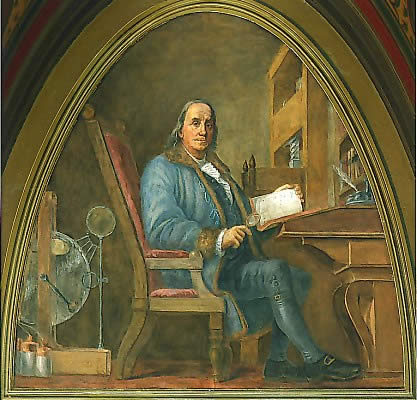
Was Benjamin Franklin right ?


Benjamin Franklin is credited with writing: "Any society that would give up a little liberty to gain a little security will deserve neither and lose both." Is what Benjamin Franklin said still valid today?


MRB:

YES HE WAS

To give up any liberty is a risk but to do it out of fear is a tragedy. Not only that but when a free nation like ours gives up something -- or imposes that loss on select citizens out of our fear -- a great sense of trust must exist between the government and the citizens who elected it.

We have to remember in this argument that we are always giving up tiny pieces of our liberty and freedom. I must stop at red lights and not drive 60 miles per hour through school zones. I can't shout FIRE! in a theater. That's why we have these things called laws and fines and jails to house those people who think they are better than the rest of the citizenry. I'd say being in jail constitutes a loss of freedom, wouldn't you? But I'd also say these restrictions make us feel a little safer. I know they do me, but I trust the system from which they derived. I must because otherwise we'd have anarchy and as pock marked as this system is sometimes I don't see any others (except in my daydreaming fantasies) that work better.

Because we have these annoyances called laws we ALL agree to abide by them. I didn't cast any votes that I can remember giving this administration carte blanch to do whatever it damned well pleased because we have a "war" going on that it can't define what it is, where it's at, and can't agree on just how to "stay the course". Was there a vote taken and I was on break or something? "Just trust me", doesn't work for me anymore ever since I figured out my parents lied to me about Santa Claus.

And so to the fear mongering conservatives out there try to remember this, please. Because there are laws, EVERYONE must follow them or change them legally through due process. The reason I caution you is because some of those very laws at which you scoff may sneak up behind you and bite you in the ass. Someday some of you may need that due process to work for you. Oh, I'm sorry, some of you have needed this irritating 230 year old system. I forgot.

KJW:

LIBERTY OR SECURITY - MUST WE CHOOSE?

We seem to be faced with an unpleasant choice. Are you willing to give up liberty to be safe? This is actually a misleading question since it assumes that we live in a world where liberty and safety are direct trade-offs - that we necessarily become safer when we give up our liberty.

This false choice between safety and liberty has been offered by the Bush Administration to justify its post-9/11 policies that undermine civil liberties. But the PATRIOT Act and related executive branch directives strip away fundamental rights of free speech, privacy and due process without making us any safer.

Consider, for example, Section 215 of the USA PATRIOT Act. It permits the government to seize your records from third parties without telling you, including your library reading lists, your medical and mental health records, your banking information, and your Internet Service Provider records. To make matters worse, Section 215 makes it a crime for the librarian, health care provider, bank or ISP to tell you that your records have been seized.

After a constitutional challenge to Section 215 was filed, former Attorney General John Ashcroft announced that the Justice Department had never actually used Section 215 to seize a library patron's books. This admission, of course, suggests what most of us knew all along: that giving the government access to your reading habits does not make you any safer. Only less free.


The first impulse of the government in all times of crisis is control and coercion. A government unconstrained by law, tradition, or public opinion is nothing short of despotic. Not everything can be justified in the name of punishment, prevention, and safety.

History teaches that in times of national insecurity, there is a tendency to sacrifice Constitutional protections in the name of national security. This is our moment in history. So the next time someone asks you whether you are willing to sacrifice freedom in the name of security, ask them a few questions of your own.

One very important question to ask is - Which rights are we being asked to give up and who decides? WHICH RIGHTS: The Bush Administration has not gone to Congress and asked for certain rights, habeas corpus, or any other rights to be modified or changed. Instead it has merely attempted to expand the power of the Executive branch and implemented clearly unconstitutional policies and programs.

And also remember to ask WHO DECIDES. But when you do just remember that in his own words George W. Bush is THE DECIDER.


There’s never a good time to give up liberty. But when everyone else is calling for despotism to fight despotism, it’s the best time to stand up and say: We will not be moved. We need more, not less, liberty.

EJS:

Ben Franklin is one of the greatest American heroes of all time. He could be credited with the American victory in the Revolutionary War, as it was his diplomatic skills which prompted France to enter the war on our side, thus tipping the scales against the British. But in this matter, I must respectfully disagree with Mr. Franklin. The fact is, Ben Franklin lived in a different time. There is no way he could ever imagine a jet, much less a jet being used as a weapon of mass destruction. Neither him nor the Constitutional delegates could have ever imagined such technology as cell phones, internet, and spy satellites. And thus it is up to us to interpret the Constitution and do the best we can to apply it to today's modern world. The fact remains, Americans have always had to sacrifice some civil liberties during times of war. During the Civil War, Abraham Lincoln suspended habeas corpus until the end of the war in order to detain Confederate agents and not have them fighting against the Union on the battlefield. FDR interned 100,000 Japanese-American during WWII in order to prevent spying from within the United States. They were treated humanely in the camps, and at the conclusion of the war, were released.


What George Bush has done pales in comparison to these examples. The fact is, the wiretapping that is being done by the NSA is extremely focused and not widespread as many media pundits would have you believe. It applies only to known or suspected Al Qaeda agents, and only applies to international calls. No domestic calls are being monitored. Unless you are talking to Uncle Osama in Pakistan, you have nothing to fear. The Constitution is not a suicide pact. In a post-9/11 world, we must use all tools necessary to prevent attacks and protect American citizens here and abroad. Gone are the days when we simply waited to be hit and reacted. Remember, one dirty bomb can really ruin your day.